Apa itu Konektor Serat ke Serat? Jenis, Aplikasi, dan Panduan Pemilihan

2025-10-11

0.jpg

Optimasi Snippet

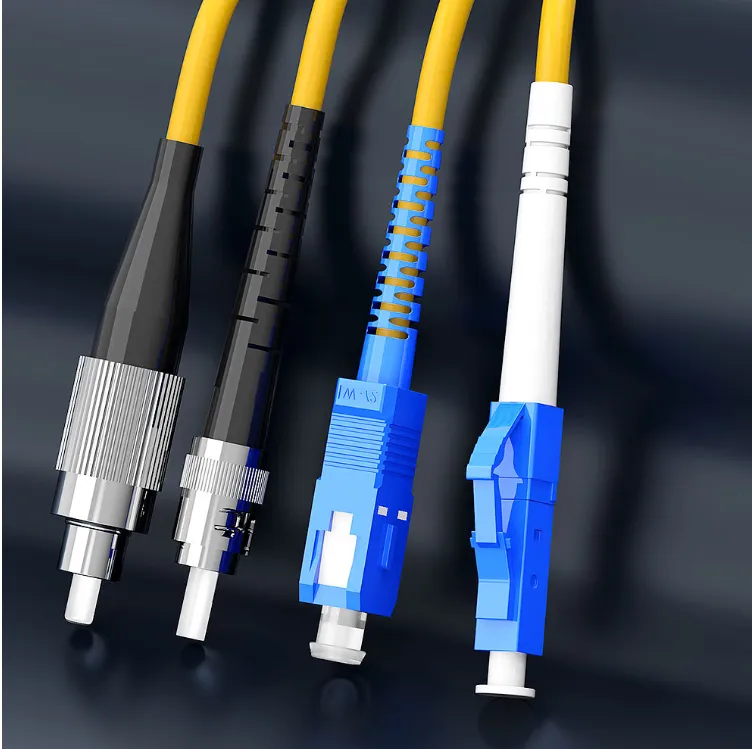
Konektor serat-ke-serat, juga dikenal sebagai konektor kabel atau sambungan serat, adalah perangkat yang digunakan untuk menghubungkan serat optik secara permanen atau sementara untuk memungkinkan transmisi sinyal optik yang efisien. Ini menggunakan ferrule presisi tinggi dan selongsong penyelarasan untuk menyelaraskan wajah ujung dua serat optik, meminimalkan kehilangan sinyal optik. Jenis umum termasuk LC, SC, dan MPO / MTP, dan banyak digunakan dalam telekomunikasi, pusat data, dan jaringan perusahaan.


1. Peran inti konektor serat optik

Konektor serat optik adalah komponen penting dalam sistem komunikasi optik. Mereka menyediakan metode yang cepat, dapat diulang, dan bebas sambatan untuk menghubungkan dan memutuskan tautan serat optik. Tujuan utama konektor adalah untuk memastikan penyelarasan inti serat yang tepat, mengakibatkan kehilangan penyisipan yang rendah dan kehilangan pengembalian yang tinggi, memastikan transmisi sinyal optik berkualitas tinggi.

2. Jenis konektor serat optik utama

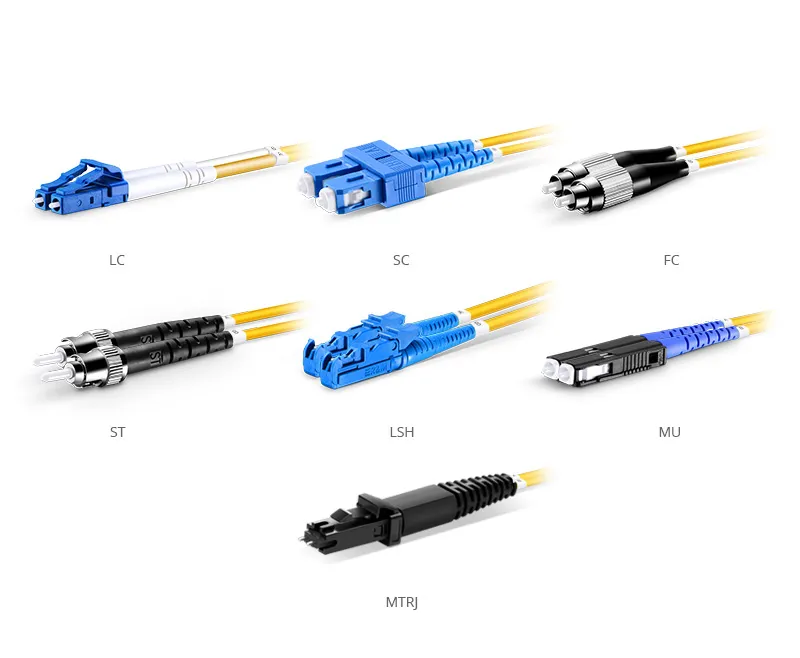
Ada sekitar seratus jenis konektor serat optik di pasaran, tetapi yang paling umum dan banyak digunakan terutama sebagai berikut:

Connector TypeKey FeaturesFerrule sizeTypical application scenarios
LC (Konektor Lucent)Faktor Bentuk Kecil (SFF), Mekanisme Latch1,25 mmPusat data, panel tambalan kepadatan tinggi, transceiver SFP / SFP +
SC (Konektor Pelanggan)Mekanisme Push-Pull, kinerja luar biasa2,5 mmJaringan telekomunikasi, jaringan optik pasif (PON), koneksi point-to-point
ST (Tip Lurus)

Koneksi bayonet, pegas dimuat

2,5 mmAplikasi multi-mode awal, jaringan perusahaan, dan aplikasi militer
MPO / MTP (Multi-fiber Push On)Multi-serat (4 hingga 144 inti), desain kepadatan tinggiN / APusat data kepadatan ultra-tinggi, transmisi optik paralel 40G / 100G / 400G


20240718102421cvzawn.jpg


3. Jenis semir konektor

Pemoles wajah akhir konektor serat optik adalah faktor kunci yang mempengaruhi kinerja dan terutama dibagi menjadi tiga kategori:

  • PC (Kontak Fisik): Wajah ujung sedikit cembung untuk mengurangi celah udara.
  • UPC (Kontak Fisik Ultra): Memiliki hasil akhir yang lebih halus daripada PC dan kehilangan pengembalian yang lebih tinggi (refleksi sinyal lebih sedikit).
  • APC (Kontak Fisik Bersudut): Permukaan akhir dipoles pada sudut 8 derajat. Ini adalah pilihan terbaik untuk mencapai return loss yang sangat rendah (> 60 dB) dan sering digunakan dalam aplikasi mode tunggal dengan persyaratan refleksi yang sangat tinggi, seperti CATV dan FTTX.


4. Bagaimana cara memilih konektor serat optik yang tepat?

Memilih konektor serat optik yang tepat perlu mempertimbangkan faktor-faktor berikut:

  1. Persyaratan kepadatan: Dalam lingkungan kepadatan tinggi (seperti pusat data), LC (ukuran terkecil) dan MPO / MTP (multi-serat) lebih disukai.
  2. Tipe Jaringan: Jaringan Telecom dan PON sering menggunakan konektor yang dipoles SC dan APC.
  3. Mode Serat:
    • Mode Tunggal: Diameter inti tipis (sekitar 9 m), cocok untuk transmisi jarak jauh, biasanya dengan pemolesan UPC atau APC.
    • Multi-Mode: Diameter inti adalah 50 m atau 62,5 m, cocok untuk transmisi jarak pendek, biasanya dengan PC atau UPC polishing.
  4. Frekuensi koneksi dan pemutusan: Desain push-pull / snap-on LC dan SC menyediakan kemampuan koneksi cepat.


dalam kesimpulan

Konektor serat optik adalah fondasi jaringan modern berkecepatan tinggi. Dengan pertumbuhan lalu lintas data yang berkelanjutan dan kepadatan pusat data yang meningkat, konektor LC dan MPO / MTP menjadi standar industri. Memahami karakteristik dan aplikasi konektor yang berbeda adalah kunci untuk merancang, menerapkan, dan memelihara jaringan serat optik yang efisien.


Q & A

T: Apa fungsi utama konektor serat optik?

J: Fungsi utamanya adalah untuk mengakhiri ujung serat optik dan memungkinkan koneksi dan pemutusan yang lebih cepat daripada penyambungan fusi, memastikan transmisi sinyal optik yang efisien dan akurat antara dua serat optik.


T: Apa komponen inti dari konektor serat optik? Apa fungsinya?

J: Komponen inti adalah ferrule. Ini adalah struktur silinder yang mengamankan serat optik dan memastikan keselarasan yang tepat dari inti serat, memungkinkan cahaya lewat dengan lancar.


T: Apa jenis konektor serat optik yang umum di pasaran?

A: Jenis konektor umum termasuk SC (persegi), LC (profil rendah), ST (bayonet), dan MTP / MPO.


T: Mengapa koneksi serat optik membutuhkan presisi yang lebih tinggi daripada koneksi kabel?

J: Karena serat optik mengirimkan pulsa cahaya daripada sinyal listrik, konektor harus menyelaraskan dengan sempurna dua inti serat kaca atau plastik kecil untuk meminimalkan kehilangan sinyal optik (kehilangan penyisipan).


T: Aplikasi apa yang biasa digunakan sebagai konektor serat optik?

 A: Mereka banyak digunakan di kantor switching telekomunikasi, pusat data, jaringan komputer, fiber-to-the-home (FTTH), jaringan televisi kabel (CATV), dan berbagai sensor dan aplikasi industri.


Pertanyaan Produk

We use cookie to improve your online experience. By continuing to browse this website, you agree to our use of cookie.

Cookies

Please read our Terms and Conditions and this Policy before accessing or using our Services. If you cannot agree with this Policy or the Terms and Conditions, please do not access or use our Services. If you are located in a jurisdiction outside the European Economic Area, by using our Services, you accept the Terms and Conditions and accept our privacy practices described in this Policy.
We may modify this Policy at any time, without prior notice, and changes may apply to any Personal Information we already hold about you, as well as any new Personal Information collected after the Policy is modified. If we make changes, we will notify you by revising the date at the top of this Policy. We will provide you with advanced notice if we make any material changes to how we collect, use or disclose your Personal Information that impact your rights under this Policy. If you are located in a jurisdiction other than the European Economic Area, the United Kingdom or Switzerland (collectively “European Countries”), your continued access or use of our Services after receiving the notice of changes, constitutes your acknowledgement that you accept the updated Policy. In addition, we may provide you with real time disclosures or additional information about the Personal Information handling practices of specific parts of our Services. Such notices may supplement this Policy or provide you with additional choices about how we process your Personal Information.


Cookies

Cookies are small text files stored on your device when you access most Websites on the internet or open certain emails. Among other things, Cookies allow a Website to recognize your device and remember if you've been to the Website before. Examples of information collected by Cookies include your browser type and the address of the Website from which you arrived at our Website as well as IP address and clickstream behavior (that is the pages you view and the links you click).We use the term cookie to refer to Cookies and technologies that perform a similar function to Cookies (e.g., tags, pixels, web beacons, etc.). Cookies can be read by the originating Website on each subsequent visit and by any other Website that recognizes the cookie. The Website uses Cookies in order to make the Website easier to use, to support a better user experience, including the provision of information and functionality to you, as well as to provide us with information about how the Website is used so that we can make sure it is as up to date, relevant, and error free as we can. Cookies on the Website We use Cookies to personalize your experience when you visit the Site, uniquely identify your computer for security purposes, and enable us and our third-party service providers to serve ads on our behalf across the internet.

We classify Cookies in the following categories:
 ●  Strictly Necessary Cookies
 ●  Performance Cookies
 ●  Functional Cookies
 ●  Targeting Cookies


Cookie List
A cookie is a small piece of data (text file) that a website – when visited by a user – asks your browser to store on your device in order to remember information about you, such as your language preference or login information. Those cookies are set by us and called first-party cookies. We also use third-party cookies – which are cookies from a domain different than the domain of the website you are visiting – for our advertising and marketing efforts. More specifically, we use cookies and other tracking technologies for the following purposes:

Strictly Necessary Cookies
These cookies are necessary for the website to function and cannot be switched off in our systems. They are usually only set in response to actions made by you which amount to a request for services, such as setting your privacy preferences, logging in or filling in forms. You can set your browser to block or alert you about these cookies, but some parts of the site will not then work. These cookies do not store any personally identifiable information.

Functional Cookies
These cookies enable the website to provide enhanced functionality and personalisation. They may be set by us or by third party providers whose services we have added to our pages. If you do not allow these cookies then some or all of these services may not function properly.

Performance Cookies
These cookies allow us to count visits and traffic sources so we can measure and improve the performance of our site. They help us to know which pages are the most and least popular and see how visitors move around the site. All information these cookies collect is aggregated and therefore anonymous. If you do not allow these cookies we will not know when you have visited our site, and will not be able to monitor its performance.

Targeting Cookies
These cookies may be set through our site by our advertising partners. They may be used by those companies to build a profile of your interests and show you relevant adverts on other sites. They do not store directly personal information, but are based on uniquely identifying your browser and internet device. If you do not allow these cookies, you will experience less targeted advertising.

How To Turn Off Cookies
You can choose to restrict or block Cookies through your browser settings at any time. Please note that certain Cookies may be set as soon as you visit the Website, but you can remove them using your browser settings. However, please be aware that restricting or blocking Cookies set on the Website may impact the functionality or performance of the Website or prevent you from using certain services provided through the Website. It will also affect our ability to update the Website to cater for user preferences and improve performance. Cookies within Mobile Applications

We only use Strictly Necessary Cookies on our mobile applications. These Cookies are critical to the functionality of our applications, so if you block or delete these Cookies you may not be able to use the application. These Cookies are not shared with any other application on your mobile device. We never use the Cookies from the mobile application to store personal information about you.

If you have questions or concerns regarding any information in this Privacy Policy, please contact us by email at . You can also contact us via our customer service at our Site.